Why we shouldn’t eat the fish from some Wellfleet ponds
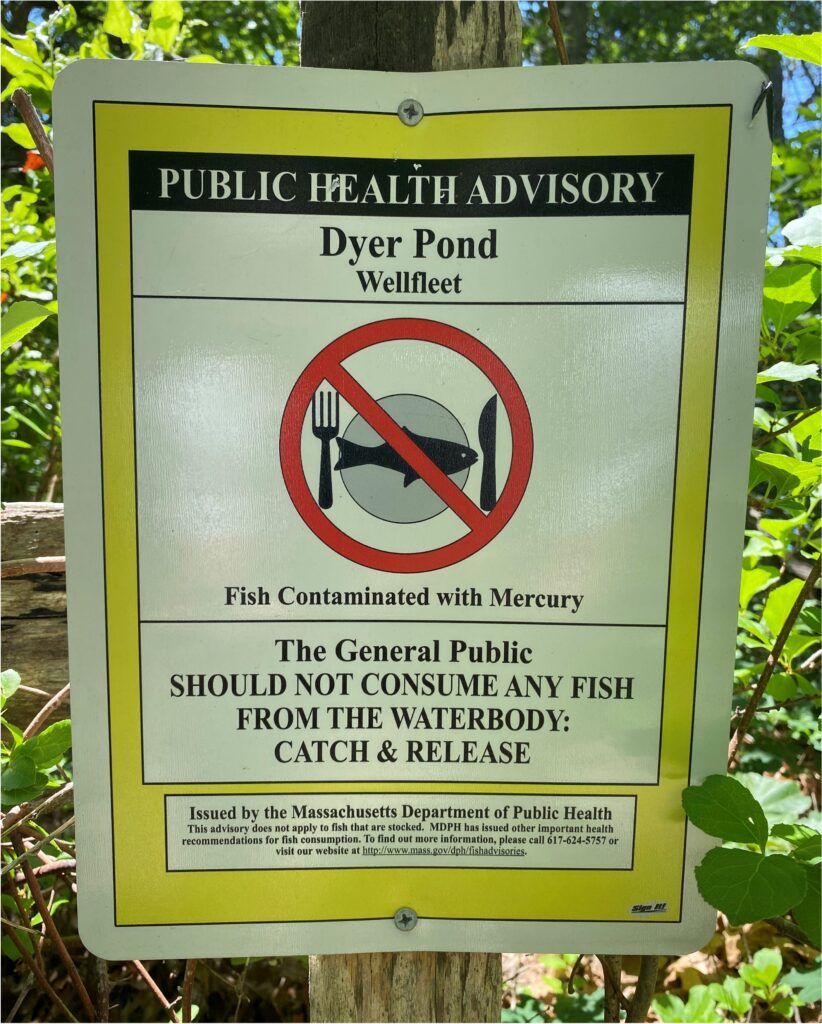
If you visit some of our most popular Wellfleet swimming ponds, you’ve likely seen signs that advise against consumption of fish from them. These signs are posted by the Massachusetts Department of Public Health based on periodic testing of mercury levels in fish tissue. When testing indicates mercury levels exceeding safe consumption thresholds, a public health advisory is posted at the pond. The most recent (2025) tests show advisories for not eating any fish from Duck, Dyer, Great and Long ponds, and to limit yellow perch taken from Spectacle Pond to no more than two meals per month. Several of the National Seashore ponds in Truro ponds also advice against eating fish. Gull Pond is a notable exception to the advisories.
The good news is that sources of mercury pollution are declining and that mercury in our ponds is only a problem for humans via the pond food chain (by eating fish).
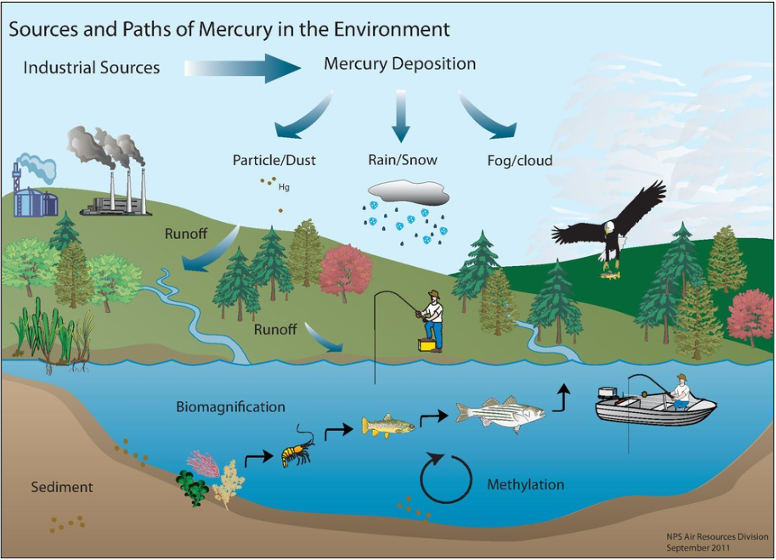
Mercury enters our ponds as fallout from air masses that carry pollutants from industrial sources – particularly coal and other fossil fuel burning power plants – often from far away places. Incineration of medical and municipal wastes also contribute mercury to the atmosphere.
After landing, under certain conditions, microbes that occur naturally in a pond can convert airborne mercury into a more toxic form called methylmercury, which can bioaccumulate in pond food chains and become magnified in the tissues of animals feeding at higher levels of the chain, including fish, fish-eating birds and humans.
Once settled in a pond, mercury will not degrade to a harmless state and can persist for a long time, both in pond sediments and the food chain.
Some other stuff to know about mercury
because mercury is easily absorbed into body tissues from food, it can concentrate in, and cause harm to, any living thing (including humans, birds and other wildlife) that eat fish from contaminated waters
mercury exposure can pose serious human health risks, including damage to the brain, heart, liver, kidneys, and immune system
pregnant and nursing women should avoid eating fish from mercury impacted waters, as it can be passed to, and cause irreversible brain and nervous system damage to, developing fetuses & nursing babies
at least 40 U.S. states, including all the New England ones, have fish in their ponds and lakes that show elevated levels of mercury
some of the highest levels of mercury in the U.S. are found in our ponds
although stricter clean air standards have reduced mercury emissions in recent years, and decreases in pond acidity make mercury less apt for absorption in animal tissues, high levels persist in our pond fishes
mercury is also found in many common household objects, including fluorescent light bulbs, button cell batteries, blood pressure cuffs, thermometers, skin lightening creams and some electronic devices
Consumers of such materials should avoid disposing of them down the drain or in trash (please use hazardous waste drop-off venues)
in 2006, Massachusetts passed a Mercury Management Act to control the sale, use and safe disposal of products containing mercury
recent declines in mercury pollution and levels observed in fish from Massachusetts ponds bring hope on the horizon for this issue
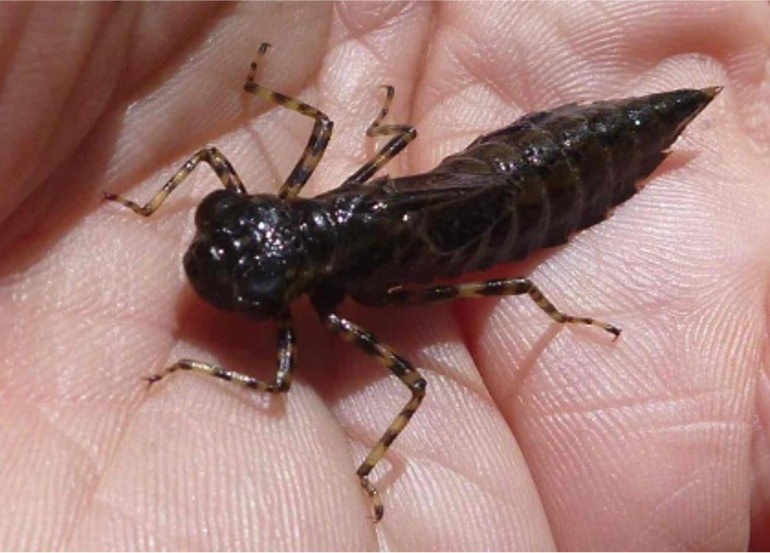
WHAT DOES THIS GUY HAVE TO DO WITH IT?
Since 2012, the Cape Cod National Seashore has participated in the nationwide Dragonfly Mercury Project, which uses this common denizen of pond ecosystems to monitor mercury accumulation in pond food chains. Dragonfly larvae – by way of feeding on smaller organisms at pond bottoms – accumulate mercury in their tissues at levels comparable to fish and thus serve as useful bio-indicators of mercury levels in fish consumed by humans.
Of the hundreds of U.S. sites monitored in this study, Cape Cod ponds are among the 12% deemed at “severe risk for mercury toxicity” (source: https://geonarrative.usgs.gov/dmp/)